

April Newsletter
Ridgewell Airfield Museum opens again tomorrow, and we'd love to see you!
From 11am to 4pm, you'll find refreshed displays, real stories from the airfield's wartime past, and a new shop area with some lovely goodies to take home. The kettle will be on, bacon rolls will be sizzling, and there'll be cake too.
Entry is free. Our volunteers will be around all day to chat and share the history that makes this place so special, so whether it's your first visit or a long-overdue return, tomorrow's the day.
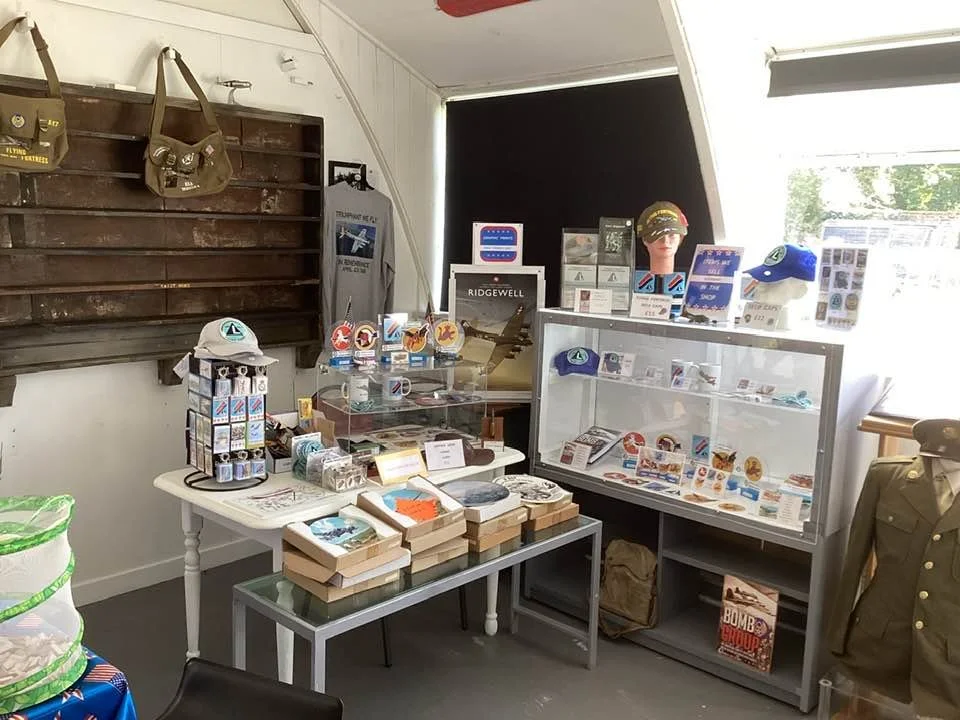
Our new shop area
April at Ridgewell Airfield
As the countryside around Ridgewell begins to turn green again, it's not so different to how it would have looked in April 1943.
But life in 1943 was anything but peaceful.
No. 90 Squadron RAF had arrived at the airfield just months earlier, flying Short Stirling heavy bombers as part of Bomber Command's No. 3 Group. By April, the squadron was in the thick of the Battle of the Ruhr, with crews flying more frequently, travelling further into occupied Europe, and facing increasing danger with every sortie.
On the night of 20th April, 17 Stirlings took off from Ridgewell to join a force of 86 aircraft tasked with attacking the Heinkel factory near Rostock, a diversion to draw German defences away from a 339-bomber assault on Stettin. The Germans set a smoke-screen over the target and bombing was scattered. Three of the squadron's aircraft were shot down by flak over the Baltic Sea. All 21 crew members were lost. It remains 90 Squadron's costliest single operation from the airfield.
Yet alongside the loss, there was extraordinary courage. Just four days earlier, Flight Lieutenant Allan Scott had his cockpit shattered by fighters over Mannheim and lost a propeller in flight, but pressed home his attack on three engines and brought his crew back to Ridgewell. He was awarded an immediate Distinguished Flying Cross.
Ridgewell in April 1943 was a place of routine and resilience, where every day carried both risk and resolve.
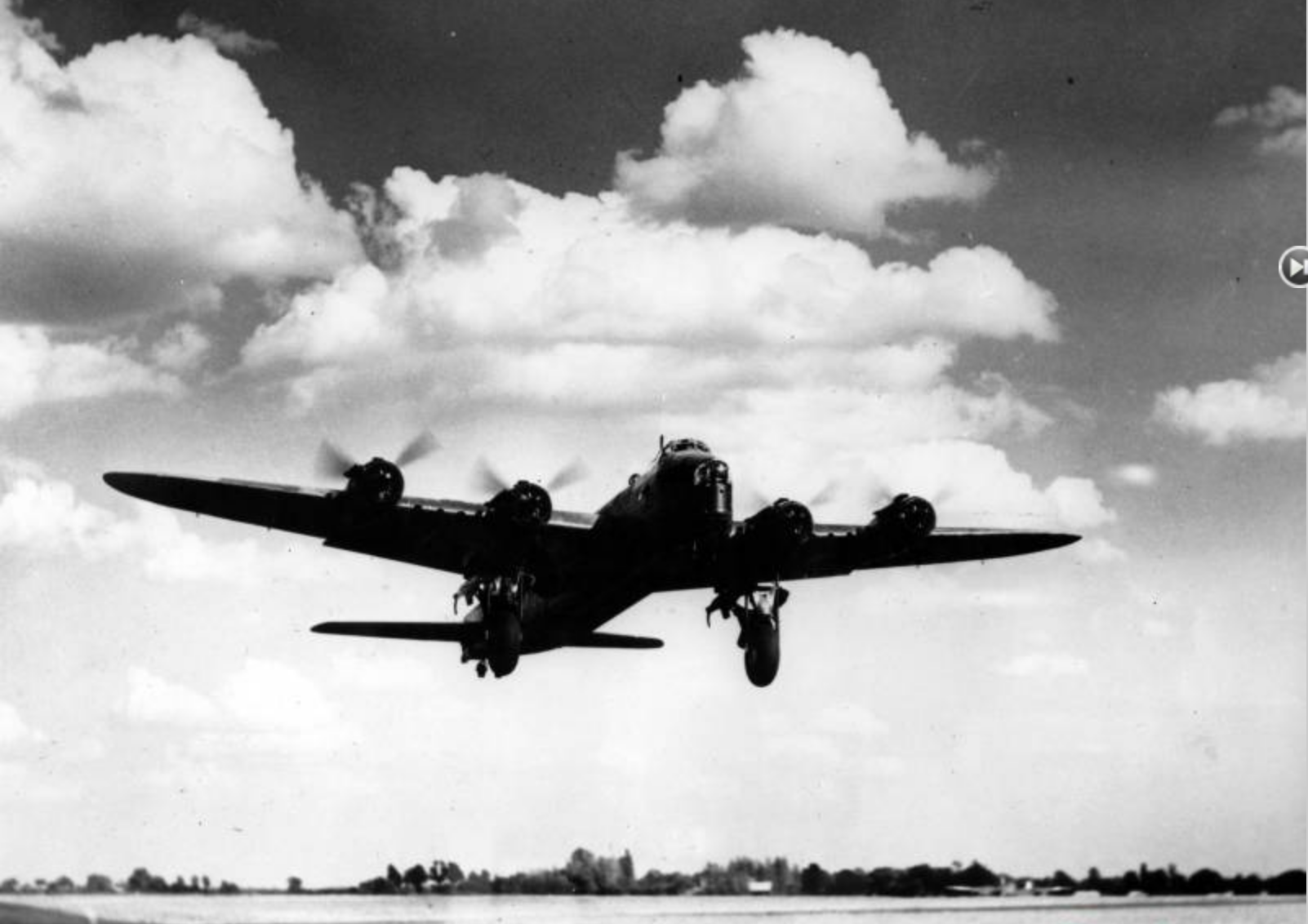
The last 90 Squadron Stirling to leave RAF Ridgewell for West Wickham May 1943
A Story Still Being Told
What makes this history so powerful is that it isn't just something we read but something we can still hear, in the voices of those who were there.
A new podcast, Triumphant We Fly, shares one of those voices.
Casey Bukowski was a waist gunner on a B-17 Flying Fortress flying from Ridgewell in 1944. He's now 101 years old. In this first episode, Casey reflects on his life before the war — an early romance, the moment Pearl Harbor changed everything, and the path that would eventually bring him to Ridgewell. It's the beginning of a remarkable story.
Tune into this podcast through Apple Podcasts and Spotify.
Be part of the story
We have two very special occasions coming up at the museum this summer, and visitors are welcome at both.
Sunday 10th May, We're honoured to be welcoming the family of Colonel Nazzaro to the museum, the officer who led the 381st Bomb Group to Ridgewell in June 1943.
It's one of our regular open days, so come along. Our volunteers will be on hand, the kettle will be on, and it's a rare chance to meet the family behind one of Ridgewell's most important stories.
Thursday 4th June
Casey Bukowski will be visiting the museum on the morning of his 102nd birthday.
Casey, right, was a waist gunner on a B-17 Flying Fortress, flying from this very airfield in 1944.
To welcome him back to Ridgewell more than 80 years later is something none of us will forget! Everyone welcome.